
Is memory scarcity slowing your IT performance?
As memory supply tightens, don’t overprovision. Optimize instead.
Memory constraints continue to strain systems and budgets. Visibility and planning help IT teams reduce risk, avoid rushed purchases, and maintain performance despite market constraints.
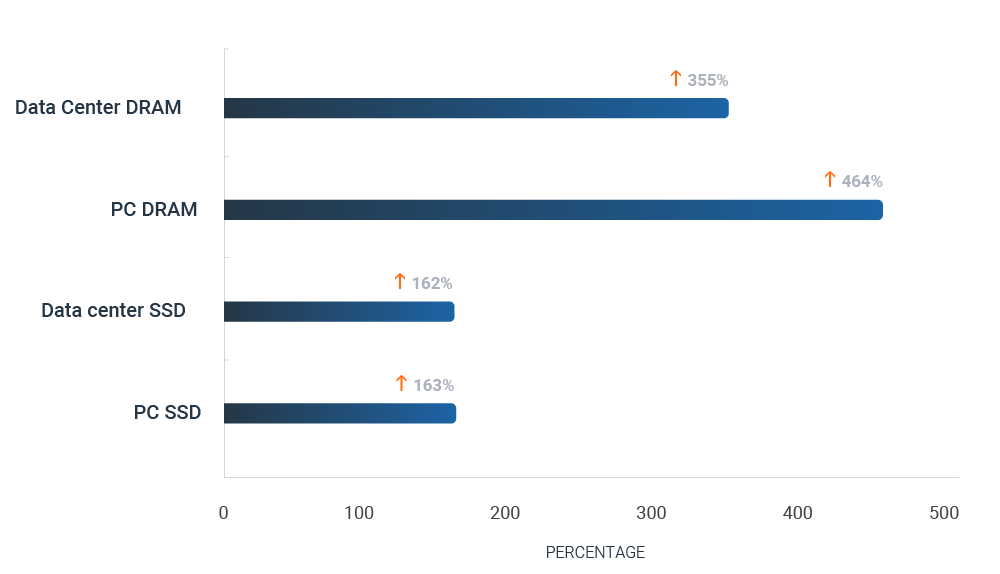
Memory Price Increases: year-on-year (Q2 '26 vs Q2 '25)
Data source: SHI Sales data via SHI One
We are still seeing ongoing changes and volatility in vendor pricing and quotes.
Act now to stay ahead
Tap into SHI's global supply chain and market reach to weigh your options.
Memory may be scarce.
System performance doesn’t have to be.
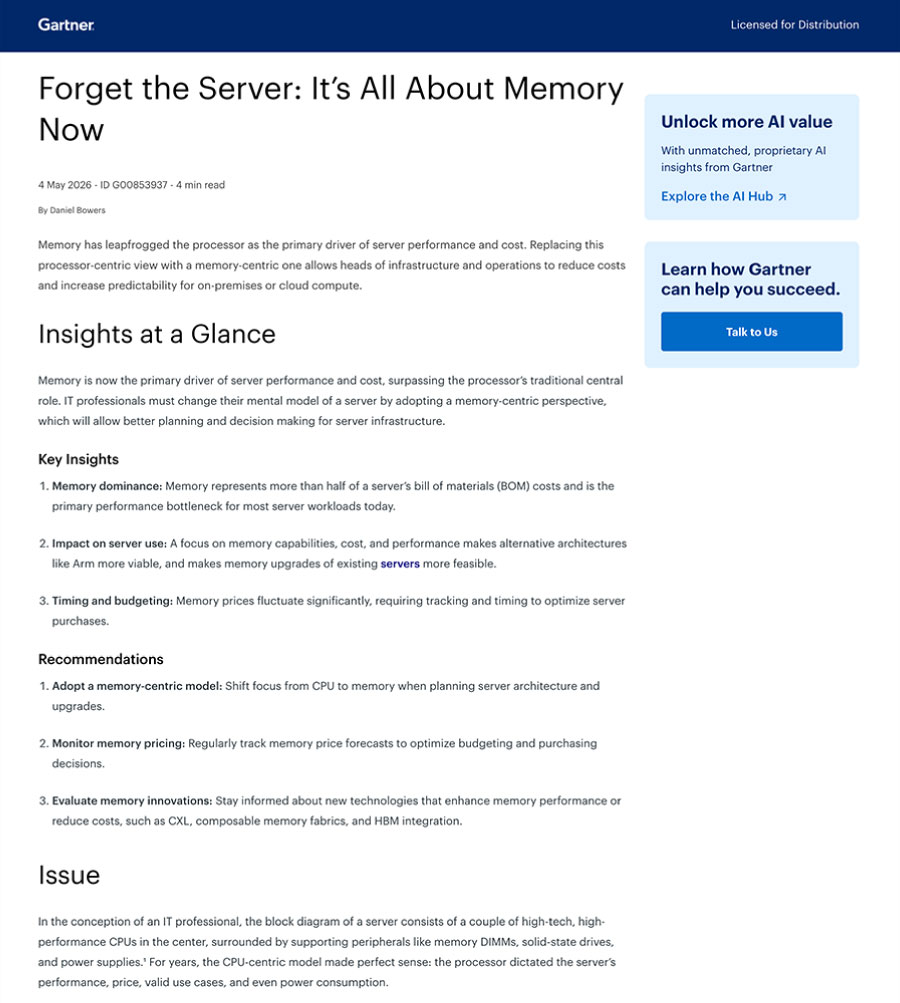
Navigate memory dominance, impact on server use, and timing and budgeting decisions in a memory-driven market with this complimentary Gartner report.
As the challenges from memory constraints compound, expertise matters.
Without strategic guidance, organizations risk growing technical debt, higher long-term spend, and reduced competitiveness.

Join us to stay ahead of shifting supply dynamics and strengthen your technology foundation.
SHI helps organizations move from reactive spending to intelligent optimization — addressing memory constraints holistically.

Data center
- Optimize host and workload placement.
- Rebalance virtualized and AI workloads to restore performance and density.
- Improve lifecycle planning to extend asset value.

Storage
- Improve storage arrays to eliminate latency bottlenecks.
- Reclaim unused capacity and improve data efficiency.
- Scale throughput and capacity to support AI and analytics.

End user
- Intelligently refresh devices based on performance and workload needs.
- Identify opportunities to extend device lifecycles.
- Maintain a consistent user experience across devices.

Network performance
- Modernize what matters and extend what works.
- Gain endtoend visibility to networkdriven memory inefficiencies and risk.
- Optimize network architecture for highthroughput, lowlatency performance.
Benefits

Cost control in a volatile market

Business continuity and risk reduction

Enhanced IT infrastructure visibility

Reduced memory pressure without hardware sprawl

Improved performance and stability

Transition to performance-based refreshes
Solve for today and tomorrow with SHI


Solution

Solution
Assess your infrastructure and end-user readiness.
Get expert guidance from an SHI memory specialist
Get expert guidanceFrequently asked questions
The main drivers are rising demand for AI, analytics, and data-heavy workloads, which limit the supply of traditional DRAM. This leads to higher costs and reduced availability for both enterprises and end users. Learn more about supply chain trends.
Enterprises may experience higher hardware costs, delayed refresh cycles, decreased system performance, and pressure to over-provision DRAM. These are especially true in virtualized or AI-driven environments.
Over-provisioning DRAM increases costs and may hide underlying infrastructure inefficiencies. Instead, focus on optimizing storage performance, improving workload placement, and maximizing existing capacity. These help reduce memory pressure without unnecessary spending.
AI and analytics need fast, efficient memory. Shortages can slow model training, inference, and data processing. Optimizing your infrastructure is key to maintaining high performance.
Yes, you can reduce memory consumption and maintain low-latency performance, often without adding DRAM, by designing efficient storage architectures, rebalancing workloads, and reclaiming unused capacity.
In virtualized environments, poor storage alignment and uneven workload distribution can increase host memory use, limiting VM density and overall efficiency.
Prepare by monitoring memory usage closely, planning hardware lifecycles proactively, benchmarking system performance, and implementing optimization strategies to extend the value of your current hardware.
SHI supports customers by providing lifecycle planning, optimizing storage and workloads, reclaiming unused capacity, and offering data protection services and centralized monitoring.
No, most experts expect ongoing constraints as AI and data usage grow. Long-term planning and optimization are essential for future-proofing your IT environment.